
What Is the Cervical Spine?
Cervical Spine is the neck section of the vertebral column. It consists of vertebrae, joints, discs, nerves, muscles, and connective tissues that support the head and allow neck movement. The cervical spine also provides a pathway that protects the upper portion of the spinal cord while coordinating movement and sensation between the head, neck, and upper body.
Quick Facts About Cervical Spine
Category
Anatomical region
Used for
Neck movement and head support
Common confusion
The cervical spine is not the entire spinal column
Also called
Neck spine, Cervical region
Often discussed with
Neck Pain Treatment, Chiropractic Adjustments
Key Takeaways About Cervical Spine
- The cervical spine is the neck portion of the vertebral column.
- Its joints and soft tissues help control head and neck movement.
- Neck pain does not always come from the cervical spine alone.
How Cervical Spine Works
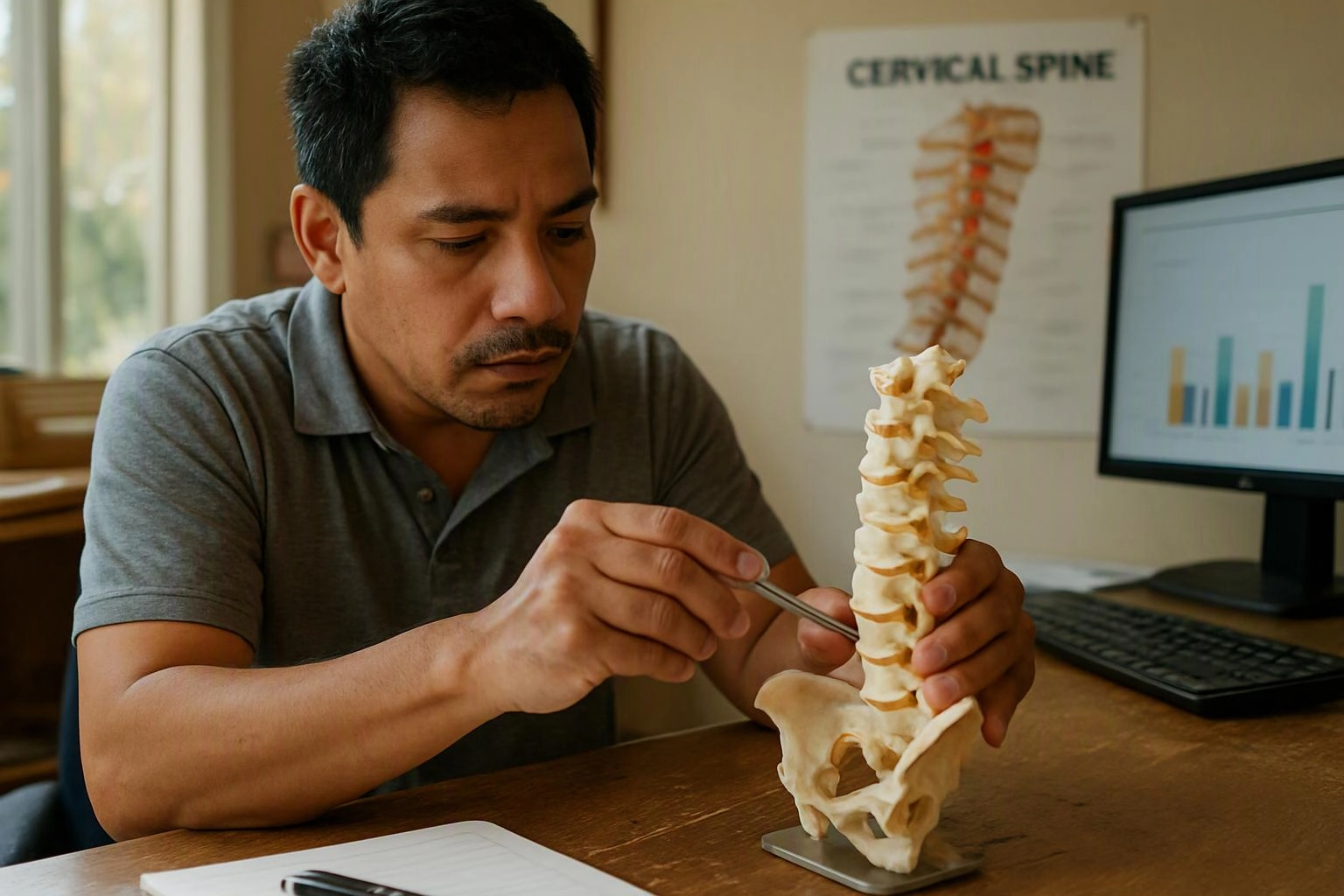
Cervical spine function depends on coordinated movement among vertebrae, discs, joints, muscles, ligaments, and nerves. The vertebrae create a flexible support column for the head. Discs help separate adjacent bones, while muscles and ligaments guide motion and help maintain position.
Related glossary terms: Atlas Vertebra, Forward Head Posture, Range of Motion.
A clinician may assess the cervical spine through posture, neck range of motion, muscle tension, joint movement, and reported symptoms. These findings help show whether movement is limited, painful, or affected by nearby tissues. The spinal cord and nerve roots are also relevant because irritation in the neck can influence sensation or movement farther along the upper body.
From the Arrowhead Clinic Chiropractor Hinesville team
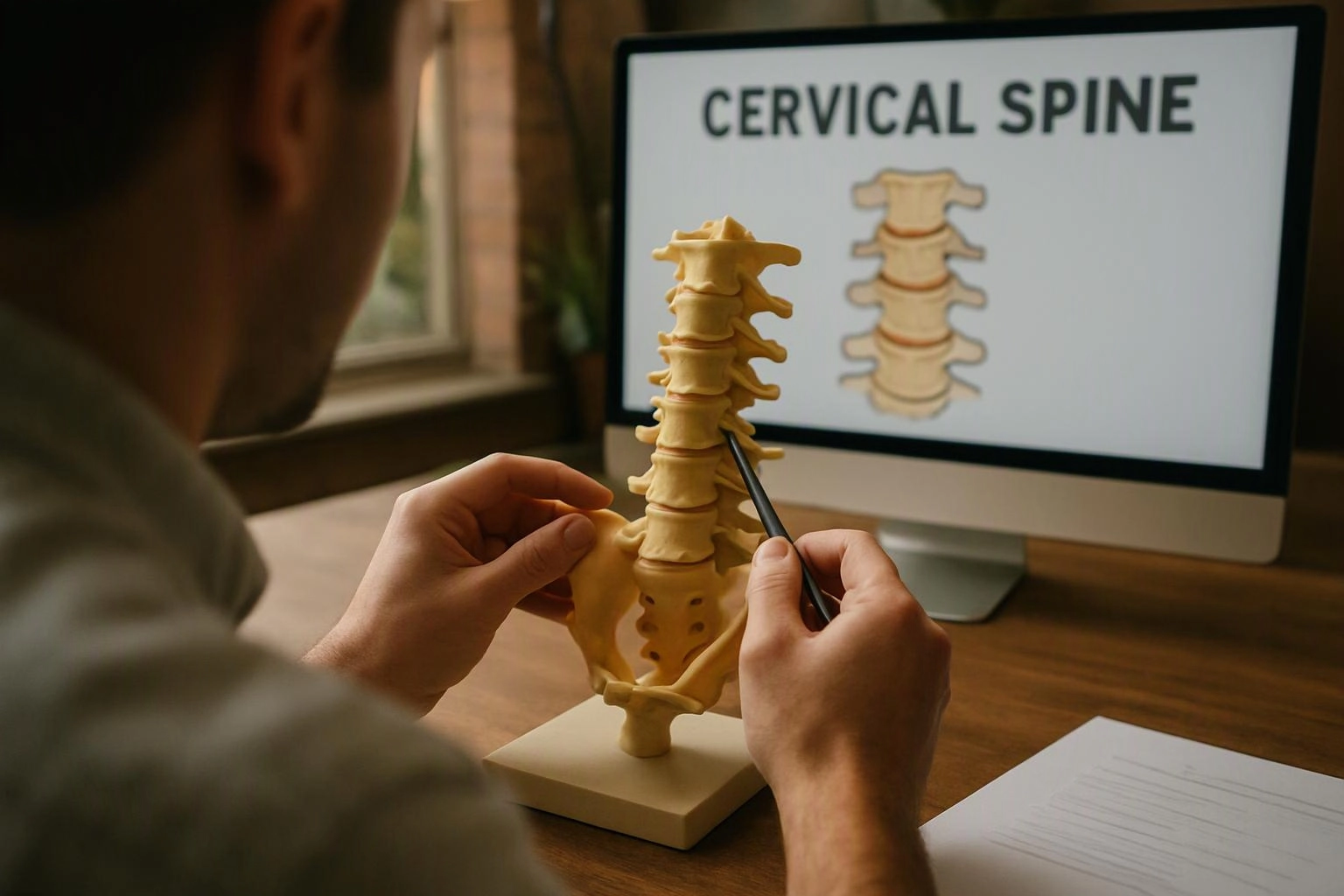
When we assess the cervical spine during Neck Pain Treatment, we consider posture, movement, muscle tension, and the patient’s reported symptoms together. We use these findings to understand how the neck functions during ordinary actions, such as turning the head or looking up. Our approach stays focused on the individual presentation.
Cervical Spine in Practice: A Real-World Example
A person with neck pain after extended computer work may have discomfort when turning the head. During Neck Pain Treatment, the cervical spine is considered alongside posture, muscle tension, and movement to guide the clinical assessment.
Related Services
Related Terms
Atlas Vertebra
Atlas Vertebra is the topmost bone in the cervical spine and supports the skull. This ring-shaped…
Forward Head Posture
Forward Head Posture is a postural pattern in which the head rests ahead of the shoulders…
Range of Motion
Range of Motion is the available movement at a joint, measured through a specific direction or…
Spinal Cord
The spinal cord is a long bundle of nervous tissue that carries signals between the brain…
Arrowhead Clinic Chiropractor Hinesville
Have Questions About Cervical Spine?
Contact Arrowhead Clinic Chiropractor Hinesville for practical guidance on Cervical Spine and related chiropractor work in Hinesville.