
What Is Pelvic Alignment?
Pelvic Alignment is the relationship between the pelvis and nearby structures, including the lumbar spine, hips, and sacroiliac joints. The term describes how these areas sit and move together during standing, walking, bending, and other activities. Practitioners assess alignment through posture, movement, and physical findings rather than through appearance alone.
Quick Facts About Pelvic Alignment
Category
Musculoskeletal assessment term
Used for
Posture and movement evaluation
Common confusion
Alignment is not a diagnosis
Also called
Pelvic balance, Pelvic positioning
Often discussed with
Prenatal Chiropractic Care
Key Takeaways About Pelvic Alignment
- Alignment concerns position and movement, not a single ideal posture.
- Assessment considers the pelvis alongside the spine and hips.
- Pelvic alignment is not the same as pelvic pain.
How Pelvic Alignment Works

Pelvic Alignment describes how the pelvis relates to the lumbar spine, hips, and sacroiliac joints during rest and movement. A practitioner may observe standing posture, walking, bending, and weight shifting to understand how these areas coordinate. Palpation and range-of-motion checks can add information about joint and muscle function.
Related glossary terms: Anterior Pelvic Tilt, Sacroiliac Joint, Lumbar Spine.
Pregnancy can change posture, balance, and movement as the body adapts to a growing abdomen. Prenatal chiropractic care considers those changes during an assessment and uses findings to guide appropriate care. Pelvic alignment does not mean that every person should hold the same posture. Healthy movement can occur across a range of positions, and an assessment focuses on function, comfort, and individual findings.
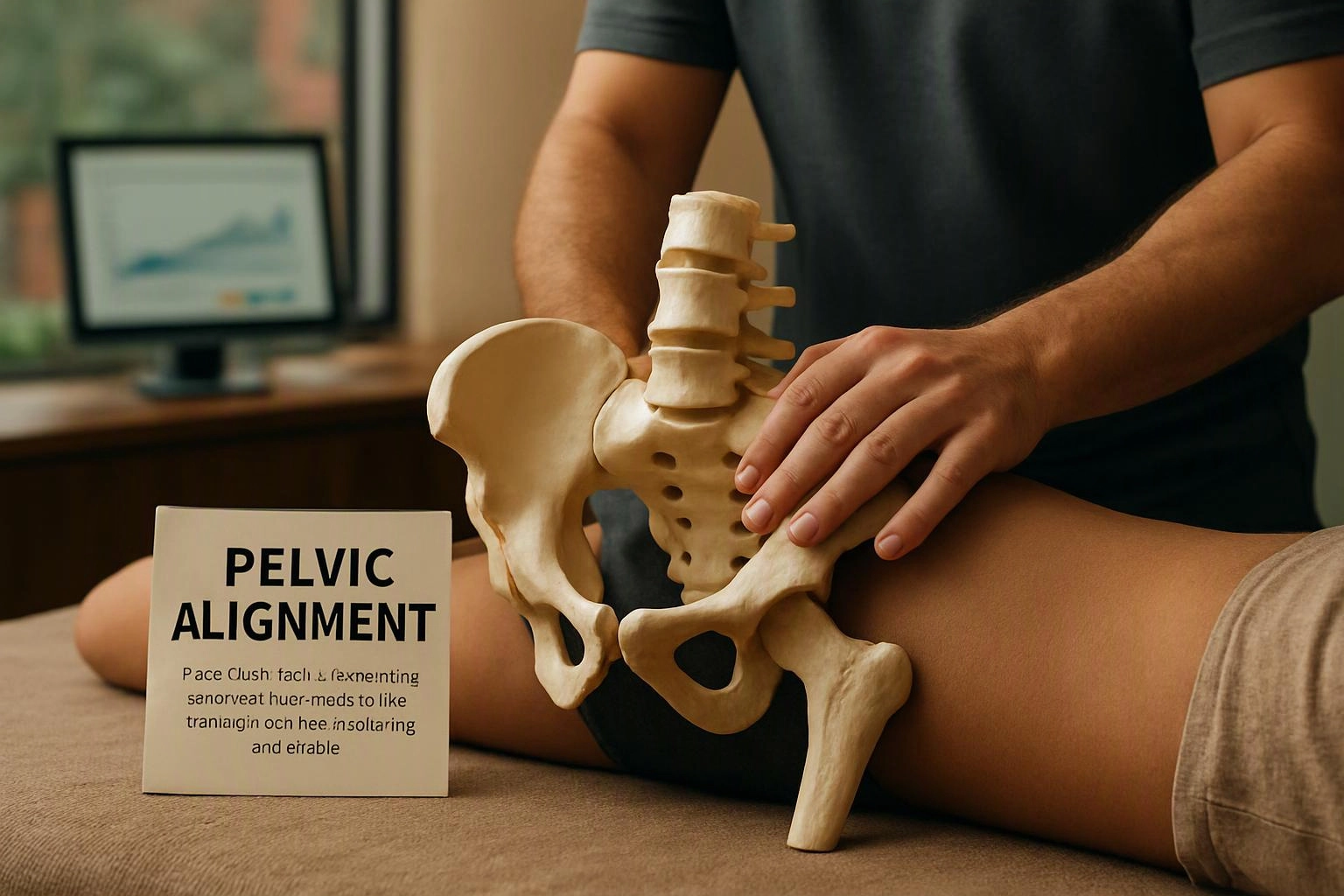
From the Arrowhead Clinic Chiropractor Hinesville team
When we assess pelvic alignment during prenatal chiropractic care, we consider posture, movement, and reported comfort together. We also account for pregnancy-related changes in balance and body position. Our team uses the assessment to guide care that fits the person’s current stage and physical findings.
Pelvic Alignment in Practice: A Real-World Example
A pregnant patient may notice discomfort while standing or turning in bed as posture changes during pregnancy. A prenatal assessment may examine pelvic motion, hip movement, and lumbar posture to identify factors that guide the care plan.
Related Services
Related Terms
Anterior Pelvic Tilt
Anterior Pelvic Tilt is a postural position in which the front of the pelvis rotates forward…
Sacroiliac Joint
Sacroiliac Joint is the connection between the sacrum at the base of the spine and the…
Lumbar Spine
Lumbar Spine is the lower section of the spinal column between the thoracic spine and pelvis…
Postural Assessment
Postural Assessment is a structured review of body alignment and movement in standing, sitting, and other…
Arrowhead Clinic Chiropractor Hinesville
Have Questions About Pelvic Alignment?
Contact Arrowhead Clinic Chiropractor Hinesville for practical guidance on Pelvic Alignment and related chiropractor work in Hinesville.