Posture-Related Stiffness: When to Look Beyond Everyday Habits
Posture-related stiffness can come from sustained positions, limited mobility, muscle tension, or an underlying condition; Arrowhead Clinic Chiropractor Hinesville evaluates movement, posture, and symptoms to guide appropriate care.
Request an EstimateWhat Posture-Related Stiffness Can Feel Like
Posture-related stiffness is a musculoskeletal symptom that can affect how freely your neck, back, shoulders, hips, and other joints move.
These patterns can reflect postural habits, movement limits, or muscle imbalance. Our team considers the full symptom history instead of treating posture as the only possible cause.
Why Sitting or Standing Can Lead to Stiffness
Prolonged sitting or standing can place the body in a static posture that limits normal movement and increases muscle fatigue.
Joint mobility often improves when daily positions are varied and the body has opportunities to move. We assess how your spine and joints respond to movement so we can separate a positioning issue from a broader movement concern.
When Restricted Movement Deserves an Evaluation
Restricted movement deserves evaluation when stiffness persists, worsens, repeatedly returns, or interferes with ordinary activities.
Persistent stiffness can point to a movement restriction that needs more than a simple posture change. Worsening symptoms, a recurring pain pattern, or difficulty with work and home activities are reasons to schedule a chiropractic evaluation.
We review your symptoms and movement findings to decide whether chiropractic care fits the situation. If the pattern suggests a need for medical evaluation, we explain when a medical referral is appropriate.
How Our Chiropractic Evaluation Examines Posture and Movement
Arrowhead Clinic Chiropractor Hinesville examines symptom history, posture, movement, and mobility to determine whether everyday habits explain the stiffness and which next steps are appropriate.
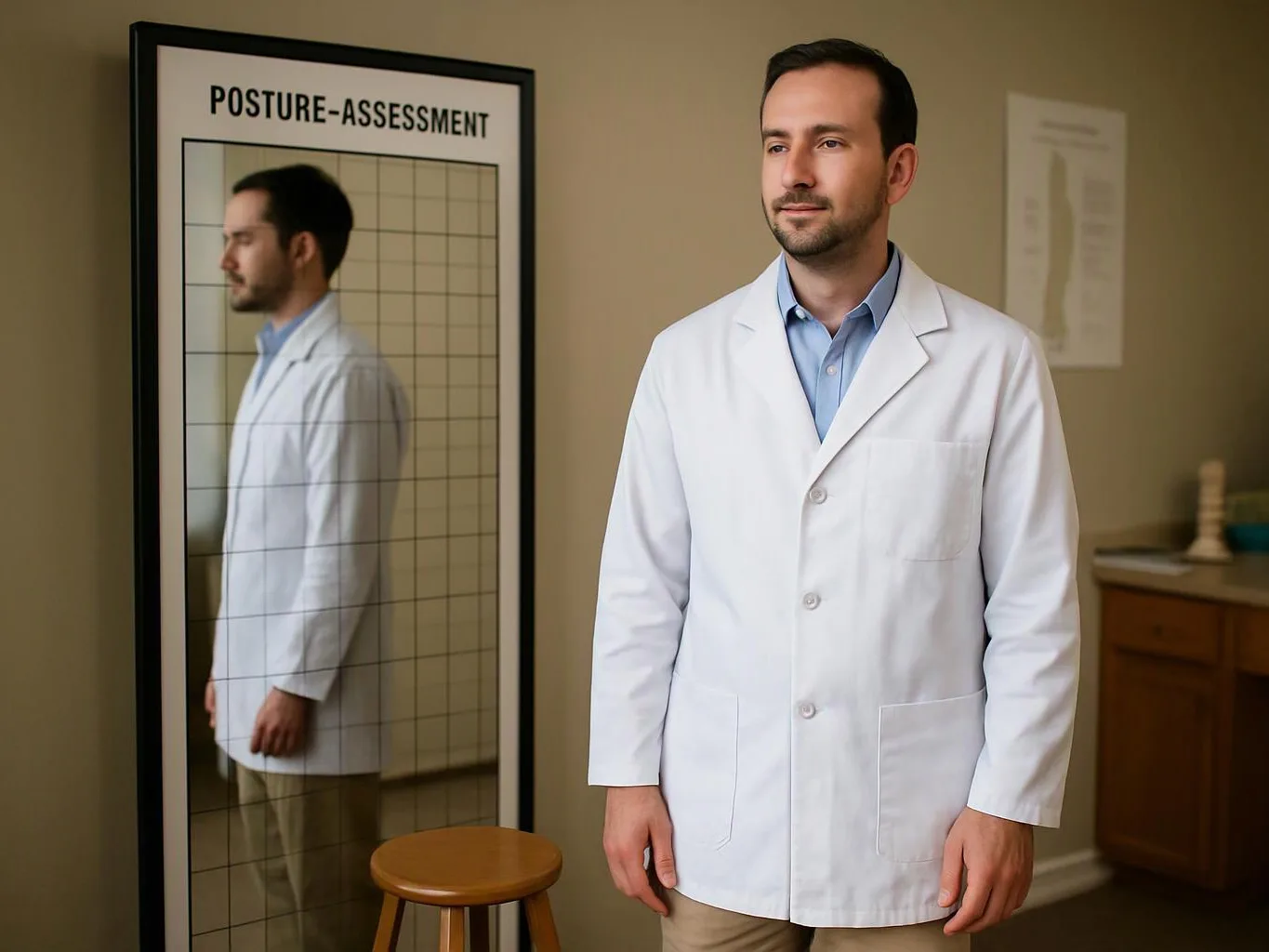
Our posture assessment looks at how you hold your head, shoulders, spine, hips, and other body regions during common positions. Our movement assessment checks spinal alignment, joint mobility, muscle balance, and the motions that bring on symptoms.
We use these findings with your health history to build a musculoskeletal assessment that matches your concerns. When appropriate, we may discuss Posture Correction, mobility work, strengthening exercises, or coordination with physical therapy.
What to Discuss During a Chiropractic Evaluation
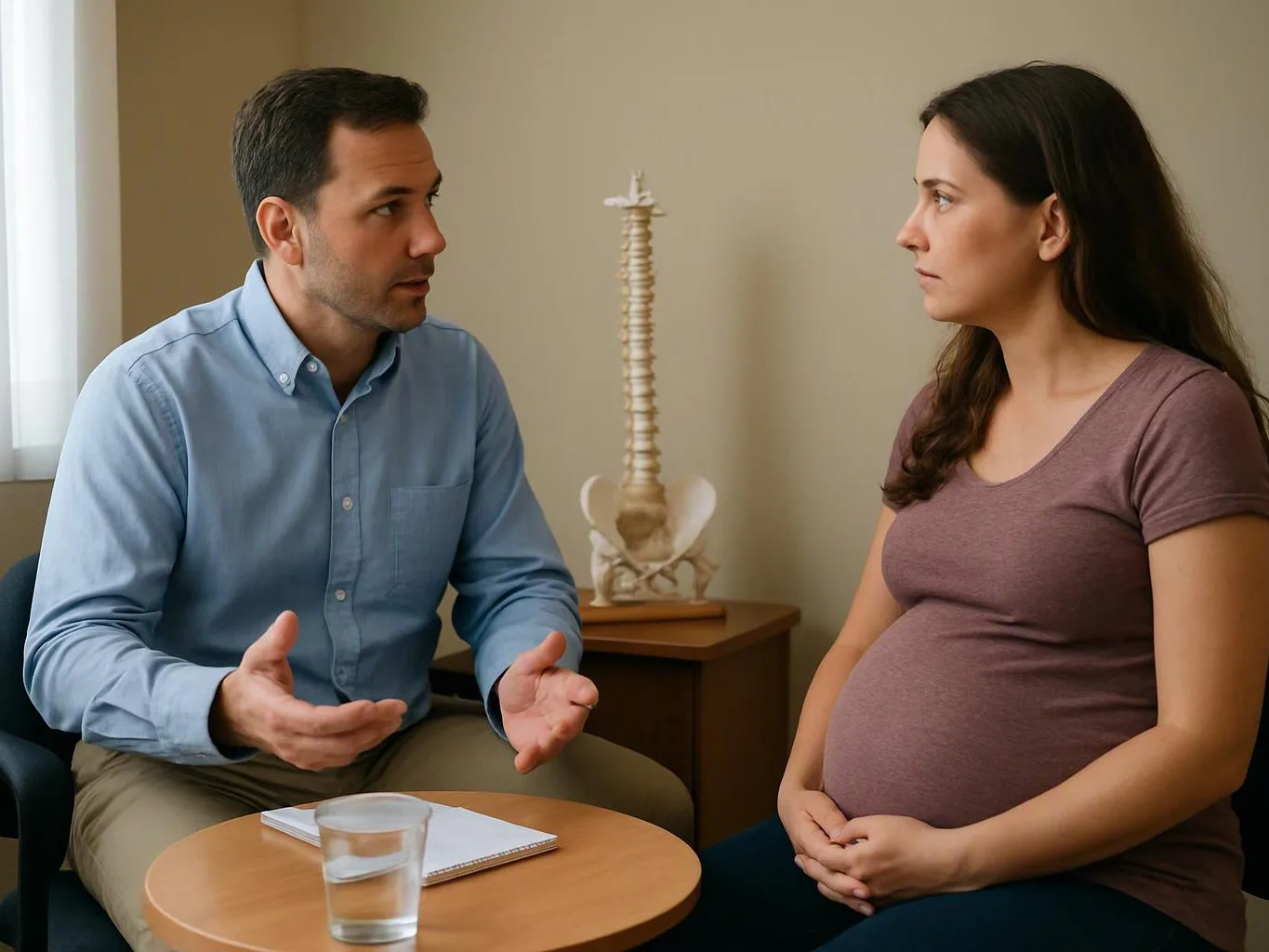
Useful details about your symptoms help us connect posture, daily activities, and movement limits during the evaluation.
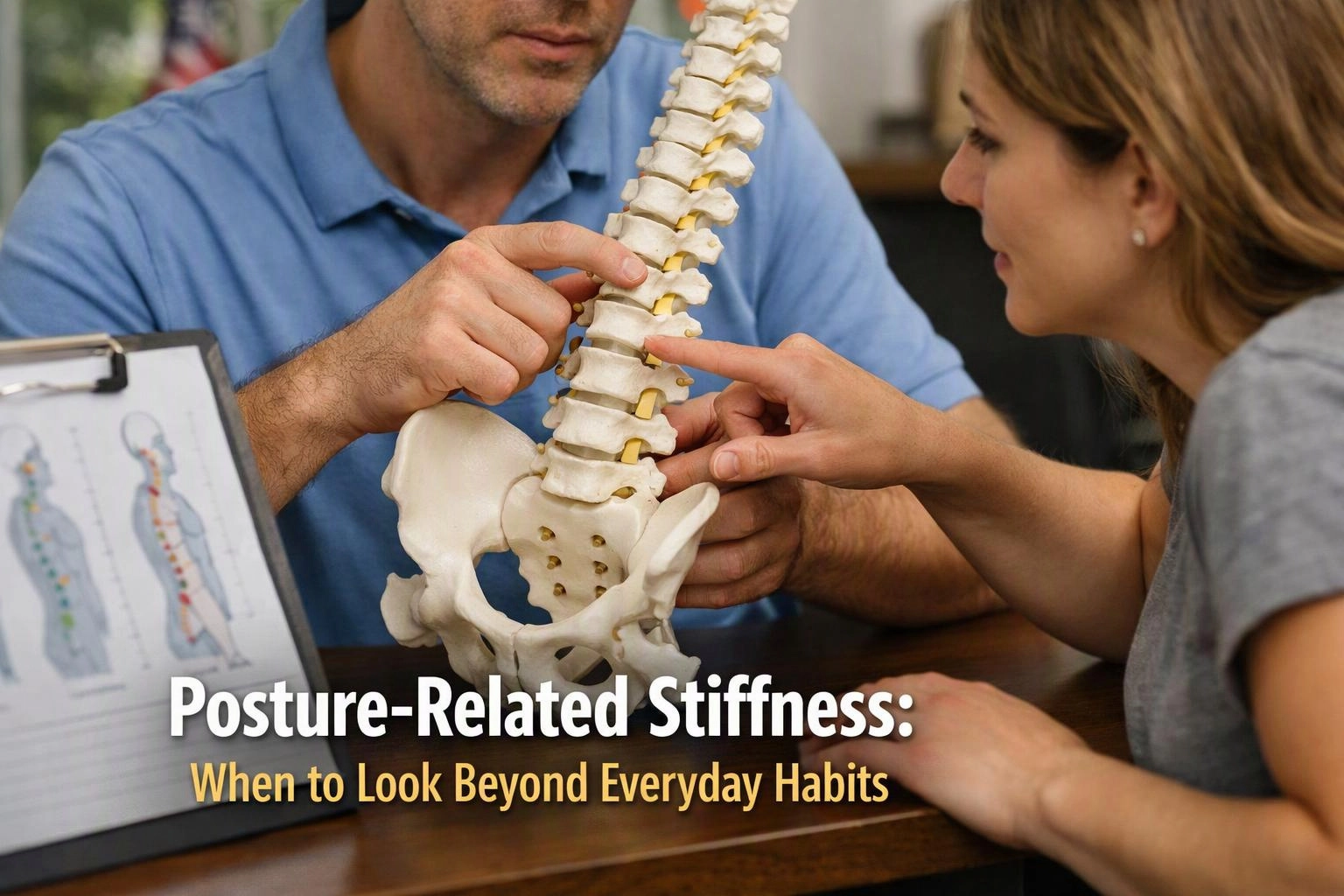
Bring clear information about what changed, what makes the stiffness better or worse, and how the symptoms affect ordinary tasks.
How Therapeutic Exercise Can Support Posture Concerns
Therapeutic exercise can support posture concerns by improving mobility, strength, body awareness, and tolerance for daily positions when the exercises match the evaluation findings.
Mobility exercises may help restore comfortable movement, while strengthening can support postural endurance and muscle balance. We select movement strategies based on your symptoms, findings, and activity needs.
Some people may benefit from physical therapy when they need a focused exercise program, additional rehabilitation support, or care for a condition outside our scope. We can explain how physical therapy may fit the next step when the evaluation points in that direction.
Everyday Steps That May Reduce Posture-Related Stiffness
Everyday movement changes may reduce stiffness when symptoms are mild and no warning signs are present.
Use these steps as a way to vary body mechanics, not as a substitute for evaluation when movement remains limited.
When Stiffness May Need Medical Attention
Stiffness may need medical attention when it follows significant trauma, appears with sudden severe symptoms, or occurs with neurological or systemic warning signs.
Red-flag symptoms can include new weakness, numbness, loss of coordination, or other neurological symptoms. Fever, unexplained illness, or sudden severe pain also calls for prompt medical evaluation.
Trauma can affect more than posture and muscle tension. We ask about the event and symptom pattern so we can recommend medical referral when the situation requires care beyond a routine movement assessment.
Questions About Posture-Related Stiffness
Can poor posture cause stiffness even without an injury?
Yes, poor posture can contribute to stiffness without an injury, and Arrowhead Clinic Chiropractor Hinesville evaluates movement, muscle tension, and joint mobility to clarify the likely contributors.
What does a chiropractor check for posture-related stiffness?
A chiropractor checks symptom history, posture, spinal mobility, joint motion, muscle balance, and the movements that reproduce or ease stiffness.
Can posture-related stiffness be a sign of something other than a habit?
Yes, posture-related stiffness can reflect a movement restriction, joint problem, muscle imbalance, or another condition that needs medical evaluation.
Should I see a chiropractor or physical therapist for posture concerns?
The right next step depends on your symptoms and evaluation findings, because chiropractic care and physical therapy can serve different needs within a movement-focused plan.
Posture-related stiffness that persists, limits movement, or keeps returning deserves a clear assessment. Contact Arrowhead Clinic Chiropractor Hinesville to discuss your symptoms and request an evaluation.
Get a Free EstimateRelated Resources
Work Injury Checklist: What to Do Before Discussing Treatment
What Goes With ItChiropractic Care, Physical Therapy, and Massage: How They Differ
What Goes With ItChiropractic Care for Sports Injuries: Evaluation and Recovery Support
What Goes With ItChiropractic Care for Work-Related Injuries