Sports Injury Symptoms to Check Before Returning to Activity
Sports injury symptoms that warrant care include severe or worsening pain, swelling, bruising, joint instability, loss of movement, weakness, numbness, or concussion signs; Arrowhead Clinic Chiropractor Hinesville evaluates movement and function through Sports Injury Treatment and Therapeutic Exercise before you resume activity.
Request an EstimateWhich Sports Injury Symptoms Should You Check First?
Sports injury symptoms that need assessment include severe or worsening pain, marked swelling, joint instability, restricted movement, weakness, numbness, or symptoms that prevent normal use.
Check how the injured area feels at rest and during simple movement. Our team reviews the pattern of symptoms and how the injury affects function.
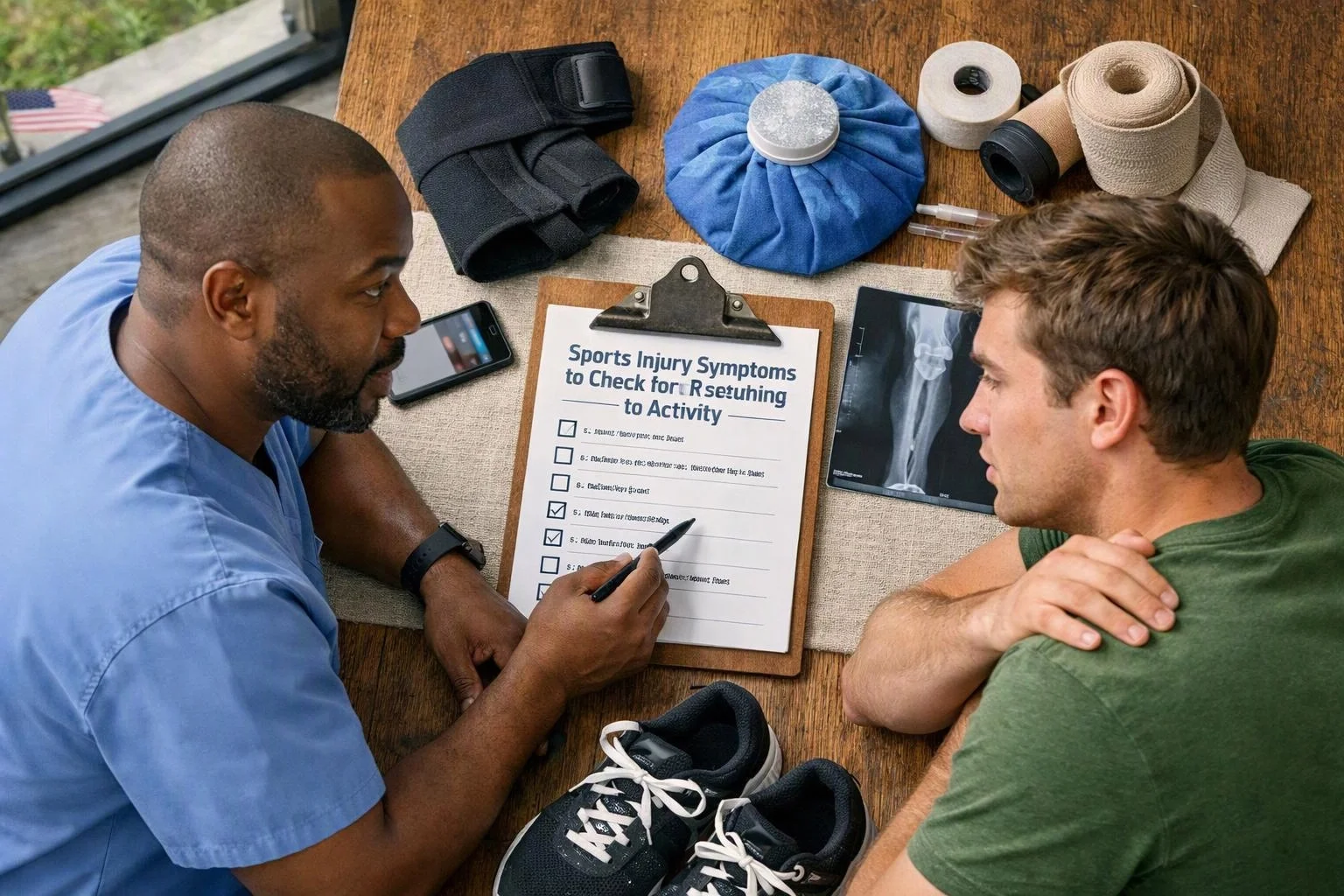
When Should You Get a Sports Injury Checked?
Sports injury assessment is appropriate when pain or swelling worsens, normal movement remains limited, the joint feels unstable, or you cannot use the injured area normally.
Persistent pain can signal that the tissue has not recovered enough for weight bearing or demanding activity. We assess joint function, movement, and tolerance so our Sports Injury Treatment plan matches your needs.
Seek urgent medical attention for a suspected fracture, severe deformity, loss of circulation, or rapidly worsening symptoms. Do not continue activity to test an injury that is becoming worse.
What Should You Do If You Suspect a Concussion?
A concussion requires prompt medical assessment when a head injury causes headache, dizziness, confusion, memory changes, nausea, balance problems, or unusual drowsiness.
Stop activity after a possible concussion and do not return to activity while symptoms remain. We can help assess movement and function, but urgent symptoms such as repeated vomiting, worsening headache, seizure, loss of consciousness, or increasing confusion require emergency medical care.
Return to activity should follow medical guidance and a gradual progression. A person should not resume sports simply because the headache has improved.
Why Does the Same Sports Injury Keep Coming Back?
A recurrent sports injury can happen when pain improves before strength, mobility, coordination, or movement control has returned.
An unchanged movement pattern may keep placing stress on the same tissue. Muscle weakness, reduced joint mobility, poor balance, and a sudden increase in training load can also contribute.
Our team looks beyond the painful area and checks how the body moves during relevant tasks. Therapeutic Exercise can build strength, control, and confidence for a gradual return.
What Does an Unstable Joint After a Sports Injury Mean?
An unstable joint after a sports injury may indicate impaired ligament support, muscle control, or joint function and should be assessed before demanding activity.
Giving way can increase the risk of recurrent injury because the joint may not control force well during cutting, landing, or weight bearing. We use a physical examination to review stability, strength, movement, and the symptoms that occur during activity.
What Commonly Causes Sports Injuries?
Sports injuries commonly result from sudden force, repeated stress, or movement demands that exceed current physical capacity. Identifying the cause helps us address the pattern that contributed to the injury.
Common causes include:
How Can You Reduce the Risk of Another Sports Injury?
Sports injury prevention works best when preparation, strength, mobility, and recovery support the demands of the activity. Our team can help identify movement habits that may increase stress on an injured area.
Useful prevention steps include:
How We Assess Readiness to Return to Activity
Return-to-activity readiness depends on restored movement, strength, control, and tolerance for sport-specific demands, not only on reduced pain.
At Arrowhead Clinic Chiropractor Hinesville, we review the injury history and perform a physical examination. We assess functional movement, range of motion, strength, balance, and coordination.
Our approach may include physical therapy principles, Sports Injury Treatment, and Therapeutic Exercise. We use the findings to guide a safe progression toward sport-specific activity.
What Should You Do Before Returning to Activity?
A safe return to activity starts with symptom monitoring and a clear check of movement, stability, and function. Use these steps to decide when further assessment is needed.
Contact Arrowhead Clinic Chiropractor Hinesville when symptoms persist, function remains limited, or you are unsure whether the area is ready for sport. Our team can discuss your symptoms and the next step in assessment.
Questions About Sports Injury Symptoms and Return to Activity
Can I play sports with swelling?
Playing sports with swelling is not safe when swelling limits movement, changes joint function, or worsens with activity. Arrowhead Clinic Chiropractor Hinesville assesses the cause of the swelling and helps determine whether the area can tolerate a gradual return.
What does it mean when an injured joint gives way?
An injured joint that gives way may have reduced ligament support, muscle control, or joint stability. Stop demanding activity and arrange an assessment before returning to sport.
Can a sports injury heal if it keeps hurting during activity?
A sports injury that keeps hurting during activity may not be ready for that level of load. Reduce the aggravating activity and seek an assessment when pain is persistent or worsening.
How do I know if I am ready to return to exercise after an injury?
You are more likely to be ready when symptoms are controlled, movement is comfortable, the joint is stable, and strength and coordination support the demands of exercise. Functional testing and a gradual progression help confirm readiness.
Sports injury symptoms deserve attention when they affect movement, strength, stability, sensation, or safe participation. We can help you decide what assessment and rehabilitation steps fit your return-to-activity goal.
Arrowhead Clinic Chiropractor Hinesville is ready to help you review your injury and plan the next step.
Related Resources
Work Injury Checklist: What to Do Before Discussing Treatment
What Goes With ItChiropractic Care, Physical Therapy, and Massage: How They Differ
What Goes With ItChiropractic Care for Sports Injuries: Evaluation and Recovery Support
What Goes With ItChiropractic Care for Work-Related Injuries