
What Is a Joint Restriction?
A joint restriction is a reduced ability of a joint to move through its normal range. The limitation may involve stiffness, altered joint motion, or discomfort during movement. In chiropractic care, the term describes a finding from an examination, not a diagnosis by itself. Providers assess the joint alongside surrounding muscles, nerves, posture, and movement patterns.
Quick Facts About Joint Restriction
Category
Movement and joint assessment finding
Used for
Guiding chiropractic adjustment decisions
Common confusion
Often confused with muscle tightness or dislocation
Also called
Restricted joint motion, Joint dysfunction
Often discussed with
Chiropractic Adjustments
Key Takeaways About Joint Restriction
- Restricted motion differs from general muscle tightness.
- Movement testing helps identify the affected joint.
- A joint restriction is not the same as a dislocation.
How Joint Restriction Works

Joint restriction describes a change in how freely a joint moves. A provider checks active movement, passive movement, joint spring, tenderness, and the way nearby tissues respond. These findings help show whether the limitation appears to involve the joint, surrounding muscles, or both.
Related glossary terms: Range of Motion, Facet Joint, Biomechanics.
During a chiropractic adjustment, the provider applies a controlled force to a selected joint when the examination supports that approach. The adjustment is intended to influence joint motion and may be paired with movement guidance or soft tissue work. The provider reassesses movement and comfort after the adjustment to compare the joint's response with the original findings.
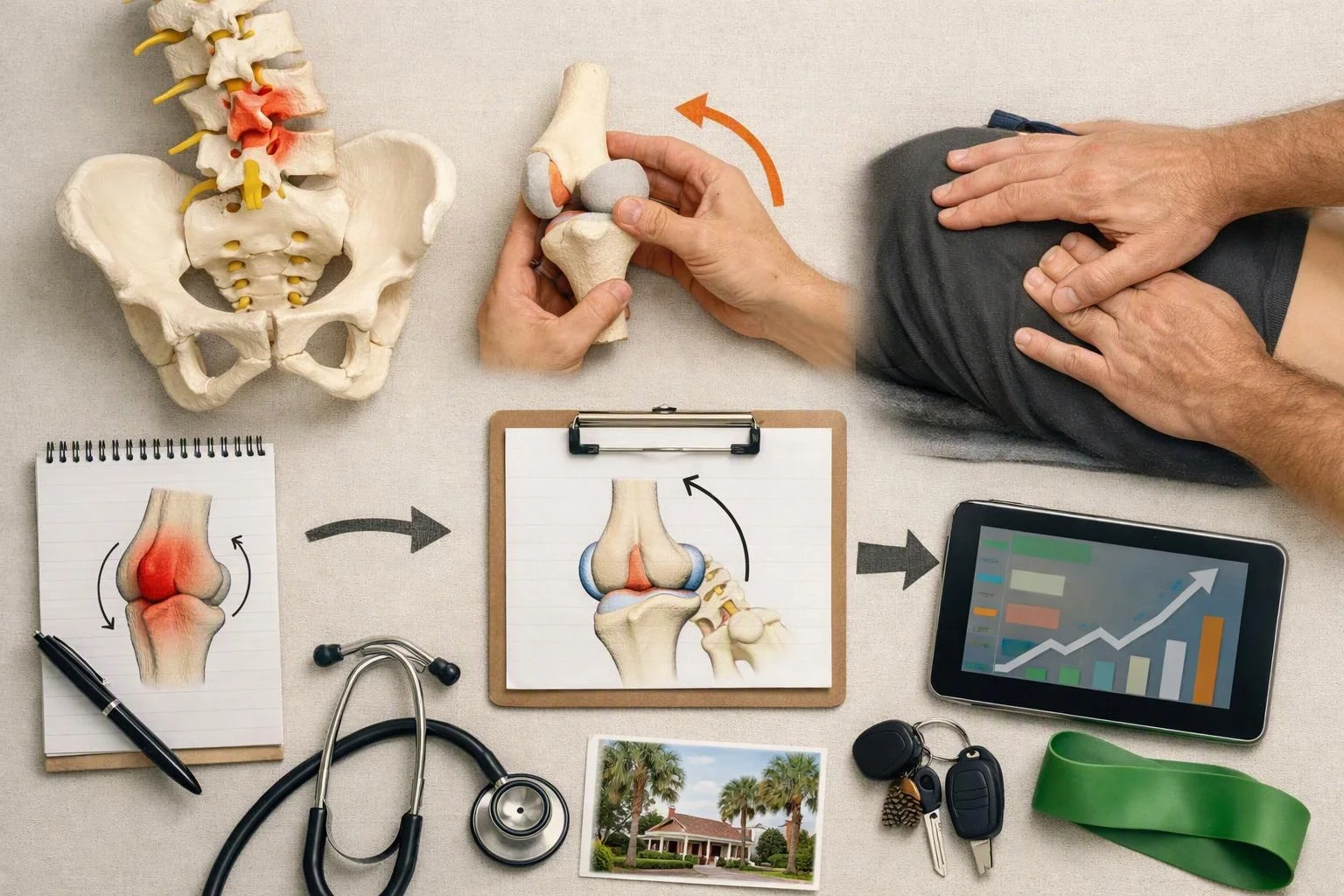
From the Arrowhead Clinic Chiropractor Hinesville team
When we assess a joint restriction, we compare movement on both sides and consider the person’s reported symptoms, posture, and functional movement. Our team uses those findings to select the appropriate chiropractic adjustment and to decide whether reassessment or a different care approach is needed.
Joint Restriction in Practice: A Real-World Example
A person who spends long periods at a desk may have limited neck rotation and stiffness when checking both directions. During Chiropractic Adjustments, the provider examines the neck and nearby tissues before selecting an appropriate adjustment.
Related Services
Related Terms
Range of Motion
Range of Motion is the available movement at a joint, measured through a specific direction or…
Facet Joint
A facet joint is a small paired joint at the back of the spine that connects…
Biomechanics
Biomechanics is the study of how forces affect movement in living bodies. In physical therapy, biomechanics…
Postural Assessment
Postural Assessment is a structured review of body alignment and movement in standing, sitting, and other…
Arrowhead Clinic Chiropractor Hinesville
Have Questions About Joint Restriction?
Contact Arrowhead Clinic Chiropractor Hinesville for practical guidance on Joint Restriction and related chiropractor work in Hinesville.