
What Is Core Stability?
Core Stability is the ability to control and coordinate the muscles around the trunk, pelvis, and hips during movement. This control helps the spine stay supported while the body bends, reaches, lifts, walks, or changes position. Core stability depends on timing, strength, breathing, balance, and control rather than abdominal strength alone.
Quick Facts About Core Stability
Category
Movement control and therapeutic exercise
Used for
Trunk support during functional movement
Common confusion
Core stability is not simply abdominal strength
Also called
Core strength, Trunk Stability
Often discussed with
Therapeutic Exercise, Posture Correction
Key Takeaways About Core Stability
- Core stability involves timing and control, not just abdominal strength.
- Good control helps the trunk remain steady during movement.
- Core stability is not the same as visible abdominal muscle definition.
How Core Stability Works
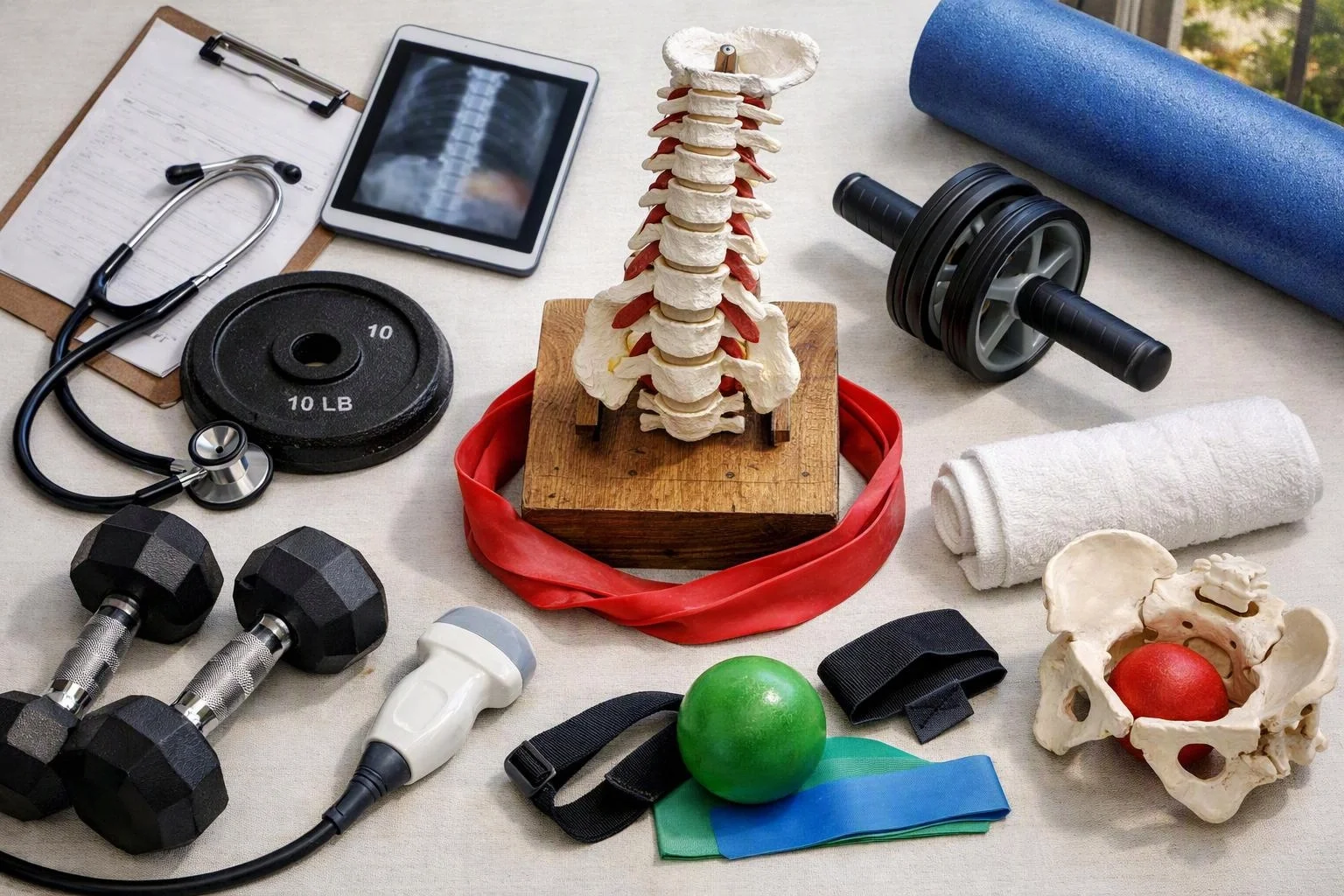
Core stability works through coordinated activity in the trunk, pelvis, and hip muscles. These muscles adjust their tension as you move, which helps control spinal and pelvic motion. Breathing and body position also affect how well the muscles respond. A person may have strong muscles but limited stability if timing or coordination is poor.
Related glossary terms: Biomechanics, Lumbar Spine, Pelvic Alignment.
Therapeutic exercise uses controlled movements to observe and improve this coordination. A clinician may watch how the pelvis stays positioned during a bridge, squat, reach, or leg movement. The exercise can then be adjusted through body position, movement range, or resistance. The goal is accurate control that carries into ordinary tasks, such as getting up from a chair or lifting an object.
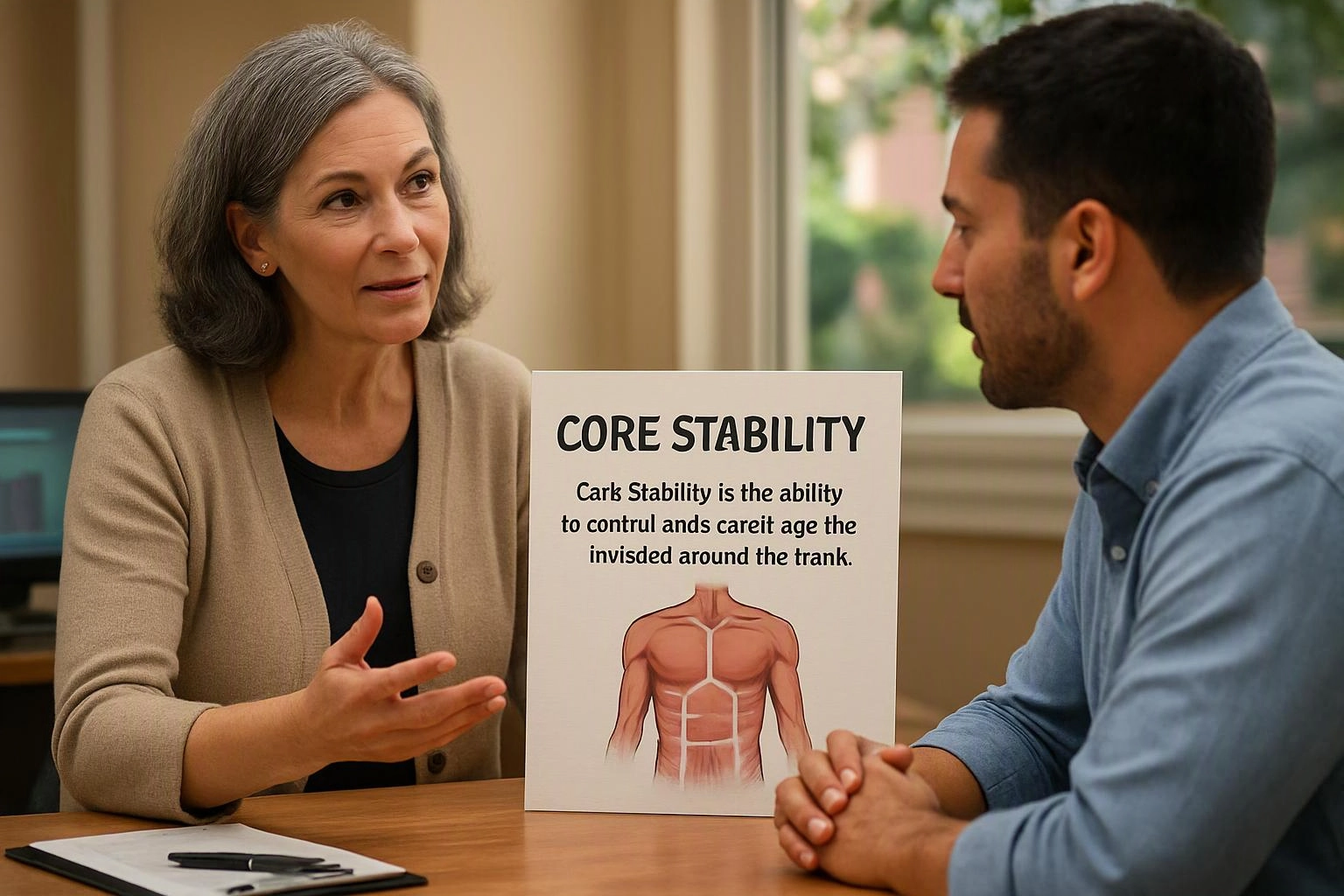
From the Arrowhead Clinic Chiropractor Hinesville team
When we use therapeutic exercise, we check how the trunk, pelvis, and hips respond during controlled movement. We look for unwanted shifting, breath holding, or loss of position, then adjust the exercise so the person can practice steady control. Our focus is movement quality, not a particular exercise or appearance.
Core Stability in Practice: A Real-World Example
During therapeutic exercise, a person may perform a bridge while keeping the pelvis level and breathing normally. The clinician observes whether the trunk remains controlled as the hips lift, then adjusts the movement if the pelvis shifts or the lower back takes over.
Related Services
Related Terms
Biomechanics
Biomechanics is the study of how forces affect movement in living bodies. In physical therapy, biomechanics…
Lumbar Spine
Lumbar Spine is the lower section of the spinal column between the thoracic spine and pelvis…
Pelvic Alignment
Pelvic Alignment is the relationship between the pelvis and nearby structures, including the lumbar spine, hips…
Postural Assessment
Postural Assessment is a structured review of body alignment and movement in standing, sitting, and other…
Arrowhead Clinic Chiropractor Hinesville
Have Questions About Core Stability?
Contact Arrowhead Clinic Chiropractor Hinesville for practical guidance on Core Stability and related chiropractor work in Hinesville.